I’m thrilled to share that DeepSeek has just launched a brand‑new open model for document recognition—DeepSeek-OCR. Unlike traditional OCR systems that merely pull raw text from pages, this one instantly reconstructs the full structure of a document: headings, lists, tables, figure captions and more. The output comes in Markdown format, which is perfect for indexing and feeding into downstream neural networks. DeepSeek-OCR is released under the MIT license and can be found on Hugging Face.
Blog
-
AI‑Friendly Patches 2.0: Plan First, Then Code
Not long ago I shared with you the birth of a new format:
.ap(AI‑friendly Patch). My goal was simple—eliminate the pain of manual copy‑paste when working with AI assistants. Instead of generating code blocks that I had to hand‑copy into source files, the AI would produce a semantic patch in a format designed for itself and apply it automatically. The number of people bookmarking the article says the idea resonated.But theory is one thing; real practice another. While using
.apon live projects—including work on far2l—I uncovered bottlenecks and accumulated ideas to make the format even more reliable, convenient, and, most importantly, “understandable” for neural nets. Today I’m excited to show you the result: a major upgrade, .ap 2.0. -
Claude Skills: Turning AI into a Universal Office Assistant

Anthropic has just launched Claude Skills, turning the Claude model into a full‑blown office assistant. Think of it as customizable folders filled with instructions, scripts and resources that Claude automatically pulls in to tackle specific tasks.
-
BrowserAgent: LLMs That Act Like Humans in the Browser

Most modern web agents still rely on a long pipeline: scrape the page, strip it down to text, hand it over to an LLM. It’s convenient, but it feels like a robot that can’t actually scroll, click, or fill out forms. And every external call adds cost. The BrowserAgent team decided to go back to the source—act directly in the browser, just like a human would. That opens up deeper page exploration and more natural multi‑step reasoning.
-
Unmasking Perplexity: Inside the AI Sandbox Architecture
Modern AI tools are getting more powerful every day, yet their inner workings often remain a mystery to us users. What actually happens the moment you hand a complex, multi‑step task over to Perplexity? How does it decide what it can do and where its limits lie?
I ran into a striking example while tinkering with one of these systems. It flawlessly parsed a website’s structure and automatically gathered every link into a single JSON file—a job that requires both network access and data analysis. But when I asked it to process each link individually, Perplexity politely replied: “Sorry, but this exceeds resource limits.”
-
AI Toolbox: 100+ Must‑Have AI Tools for Work & Creativity
I’ve been watching the AI wave roll through every corner of our work life. From programmers who let Copilot auto‑complete their functions to marketers who rely on Jasper for copy, it’s clear that intelligent assistants are becoming a staple in our daily routines. If you’re wondering which tools actually save time, I’ve compiled a list that covers everything from code generation to social media automation.
Below is my personal take on the most useful AI services and models across several categories. Feel free to try them out and see which ones fit your workflow best. And if you know of a hidden gem that’s missing, drop it in the comments – let’s keep the knowledge flowing!
-
Windows 11 Makes Copilot the New Core of Your PC Experience

Microsoft has just dropped a fresh Windows 11 update that turns the Copilot AI assistant into a core part of the OS. In a statement, Mustafa Suleimani, head of Microsoft AI, called this release a major leap toward an “AI‑first operating system.”
Copilot now sits right next to the search bar on the taskbar. It can answer questions, pull up web information and even perform actions on your computer—sorting files, locating and deleting clutter, you name it. Voice control has been re‑wired too: just say “Hey Copilot” and you’ll be able to command Windows in a conversational way.
With the new Copilot Vision mode, the assistant literally “sees” your desktop and open apps, analyzes what’s on screen, and offers context‑aware suggestions. In Word, Excel and PowerPoint it can view the entire document, not just the visible portion. There’s also a “show me how” feature that walks you through using new software or unfamiliar UI elements.
Other handy additions include connectors that let Copilot tap into external services like Gmail, Google Drive and calendars. For gamers, Microsoft introduced Gaming Copilot—a helper designed to guide you through games. Availability of these features may vary by region, the company noted.
P.S. If you’d like to keep up with my AI musings, subscribe to the channel “Сбежавшая нейросеть”, where I explore the creative side of artificial intelligence.
-
Apple Unveils Vision Pro M5: Faster, Brighter, and Now Comes with a Dual‑Knit Strap
Apple just dropped the second‑generation Vision Pro mixed‑reality headset, and I’m already buzzing with excitement. The new model runs on the M5 chip, and Apple has added a Dual Knit strap that sits on top of your head and at the back for better balance.

With the new processor, a handful of system apps feel noticeably snappier and more accurate. I noticed the difference right away when turning ordinary photos into 3D spaces – they load faster and look cleaner. Third‑party developers have reported up to a two‑fold boost in performance compared with the M4 version.
The display now refreshes at 120 Hz, and Apple claims the OLED panels output 10% more pixels than before, giving you sharper, more detailed visuals. Behind the scenes, they’ve also integrated an R1 chip that crunches data from 12 cameras, six microphones, and five sensors embedded in the headset.

Battery life has improved too. In video playback mode, the headset can run for up to three hours on a single charge. The trade‑off is that it’s now 150 grams heavier, tipping the total weight at 800 grams. The battery remains external – you still need to plug it in and stash it in your pocket.
Design-wise, Apple hasn’t made any major changes, but they’ve added the Dual Knit strap to help distribute the weight better. First‑generation users complained about the headset sliding down as it got heavier; a top‑and‑back strap should keep it steady. The strap works with both generations and is available for $100.
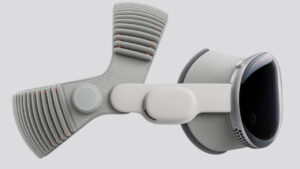
Pre‑orders for the Vision Pro M5 start on October 22. Prices begin at $3,500 for the 256 GB model and jump to $3,900 for the 1 TB version.
-
AI as the New Architect of Integrated Circuits: From Evolutionary Algorithms to Inverse Design
A Breakthrough That Stumped Engineers
Integrated circuits and millimeter‑wave/terahertz chips are poised to become the backbone of future wireless networks and high‑precision sensing systems. Yet designing them isn’t a simple “click‑and‑drag” in CAD; it’s a decades‑long craft that demands endless manual tweaking, joint design with preselected electromagnetic templates, and mountains of simulation.
These structures—radiating or non‑radiating, single‑port or multi‑port—are tuned using bespoke “hand‑crafted” methods and exhaustive parameter sweeps. A bottom‑up approach with fixed topologies narrows the space of possible solutions.
Then came an unexpected twist.
Universal Inverse Design
A recent study from Princeton and IIT Madras introduced a universal AI‑based method for inverse design of arbitrarily shaped electromagnetic structures with complex multi‑port configurations. These designs possess specified radiating and scattering properties and are co‑designed with active circuits.
The AI generated working topologies for millimeter‑wave chips—essentially “blueprints” of intricate passive structures and broadband circuits—in minutes, whereas such projects used to take weeks.
But there’s a catch.
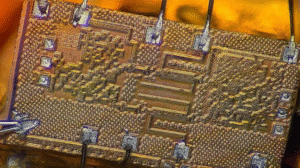
An unconventional yet effective design of a wideband millimeter‑wave amplifier created with AI. They Work… but No One Knows Why
These circuits, which look like a random scatter of elements, deliver unprecedented performance and energy efficiency—outperforming the best human‑crafted examples. Yet engineers still can’t fully explain why they work.
“People can’t understand them, but they perform better.”
— Kaushik Sengupta, lead researcher on the projectThe AI isn’t constrained by our conventional notions of “proper” layout. It finds optimal solutions in spaces where human intuition simply fails.
And this is not an isolated case; it’s part of a global shift where AI—from evolutionary algorithms to deep neural networks—is rewriting the very definition of engineering creativity.
The Black‑Box Problem
The main dilemma is opacity. Why do these strange shapes and connections work so well? We don’t know. Engineers are just beginning to master techniques that seem obvious to AI.
This black‑box phenomenon raises questions about trust, reliability, and debugging. In critical systems—from medical devices to satellites—it could become more than an academic issue; it’s a safety risk. If you don’t understand why a circuit works, you can’t guarantee it won’t fail under unexpected conditions.
Key Methodologies: How AI Learns to Design
The magic behind Princeton’s chips isn’t luck—it’s the result of applying a suite of engineering methodologies that represent a new wave of Electronic Design Automation.
Each one helps the machine “learn” to create what once required human expertise.
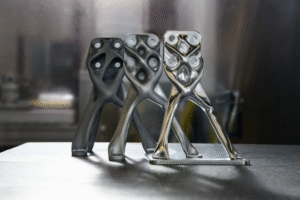
NASA’s aluminum frame, evolved with algorithms, for the rear antenna of the EXCITE telescope. The curved, interlaced reinforcing elements are engineered to withstand significant off‑axis loads and deliver optimal data‑transfer signal. Evolutionary Algorithms (EA)
EAs simulate digital evolution: circuits act as “organisms” that mutate, mate, and are selected based on fitness.
- The circuit is represented as chromosomes encoding topology.
- Genetic operators generate new variants.
- A fitness function evaluates how well the circuit meets its goal.
Drawback? The search space grows exponentially. Complexity kills speed.
Reinforcement Learning (RL)
Google DeepMind turned chip floorplanning into a game. AlphaChip, like AlphaGo, receives rewards for optimal block placement on the die. The result: designs that once took engineers weeks now appear in hours.
Deep Learning (DL)
The Princeton approach uses neural networks trained on real‑world physics. CNN models replace lengthy electromagnetic simulations by predicting circuit properties from geometry. This enables inverse design—specify the desired effect, and AI builds the shape.
A Timeline of AI in Analog & Digital Chip Design
Year Event / Publication Key Areas & Methods 1992 John R. Koza publishes Genetic Programming Birth of genetic programming as a branch of evolutionary algorithms 1992 T. Higuchi et al.—Evolvable Hardware with Genetic Learning Start of research in evolvable hardware (EHW) 1996–1999 EA applied to digital and analog circuits (Coello, Miller, Thompson, Fogarty) Emergence of “evolutionary electronics” terminology 2000–2006 Miller & Thompson → Cartesian Genetic Programming; Yan → GEP New encoding schemes for circuits 2001 Zebulum et al. publish Evolutionary Electronics Formalization of the field 2010–2011 Application of cultural algorithms and PSO to circuit optimization Expansion of EA toolbox 2017–2018 EA for 3D floorplanning and RF interconnects Practical AI in layout tasks 2020–2021 Google DeepMind: AlphaChip (RL) for chip topology Superhuman results in floorplanning 2023 NASA: “evolved structures” for space missions AI creates alien‑looking but superior parts 2024 Princeton + IIT Madras: CNN + EA for RF chip inverse design Breakthrough in analog and sub‑terahertz range 2025 AI completes design tasks in minutes instead of weeks New era of speed and efficiency When AI Overdelivers (and Misleads)
The most exciting moments happen when algorithms break free from human rules.
- A circuit‑antenna: the algorithm replaced an oscillator with an antenna that uses computer radio noise as a signal source.
- Parasitic physics: an evolutionary algorithm on FPGA exploited unmodeled effects, like electromagnetic induction between cells, to get the circuit working.
AI doesn’t “make mistakes” in the human sense—it simply finds the shortest path to its goal, even if that path seems absurd to us.
The Engineer’s New Role
AI isn’t replacing engineers; it’s reshaping the profession. As Sengupta says:
The goal is not to replace people but to empower them with new tools.
Engineers become architects of intent, not just executors of routine tasks. The key is framing the right problem and setting proper constraints.
AI isn’t a wizard, but ask it the right question and it can conjure solutions humans might never conceive.
What’s Next?
We’re on the brink of a new era in analog chip design. AI no longer just optimizes existing concepts—it starts creating what humans couldn’t imagine. It’s like giving a machine intuition without human biases.
In a few years, “AI‑designed chip” will be ordinary. A new specialization will emerge: AI co‑design engineer, someone who doesn’t draw schematics but converses with the algorithm.
And perhaps one day we’ll look at tomorrow’s asymmetric, odd‑looking circuits and think:
This looks wrong… but it works perfectly.
For Those Who Want to Dive Deeper
- John R. Koza — Genetic Programming: On the Programming of Computers by Means of Natural Selection (1992)
- Zebulum et al. — Evolutionary Electronics: Automatic Design of Electronic Circuits and Systems by Genetic Algorithms (2001)
- Google DeepMind — Chip placement with deep reinforcement learning, Nature (2021)
- NASA — Evolved Structures for Spacecraft Design (2023)
- Princeton University & IIT Madras — Inverse Design of Millimeter‑Wave and Terahertz Integrated Circuits Using Deep Learning (2024)